




Advanced Internal Splinting & Multi-Axial Fracture Fixation System
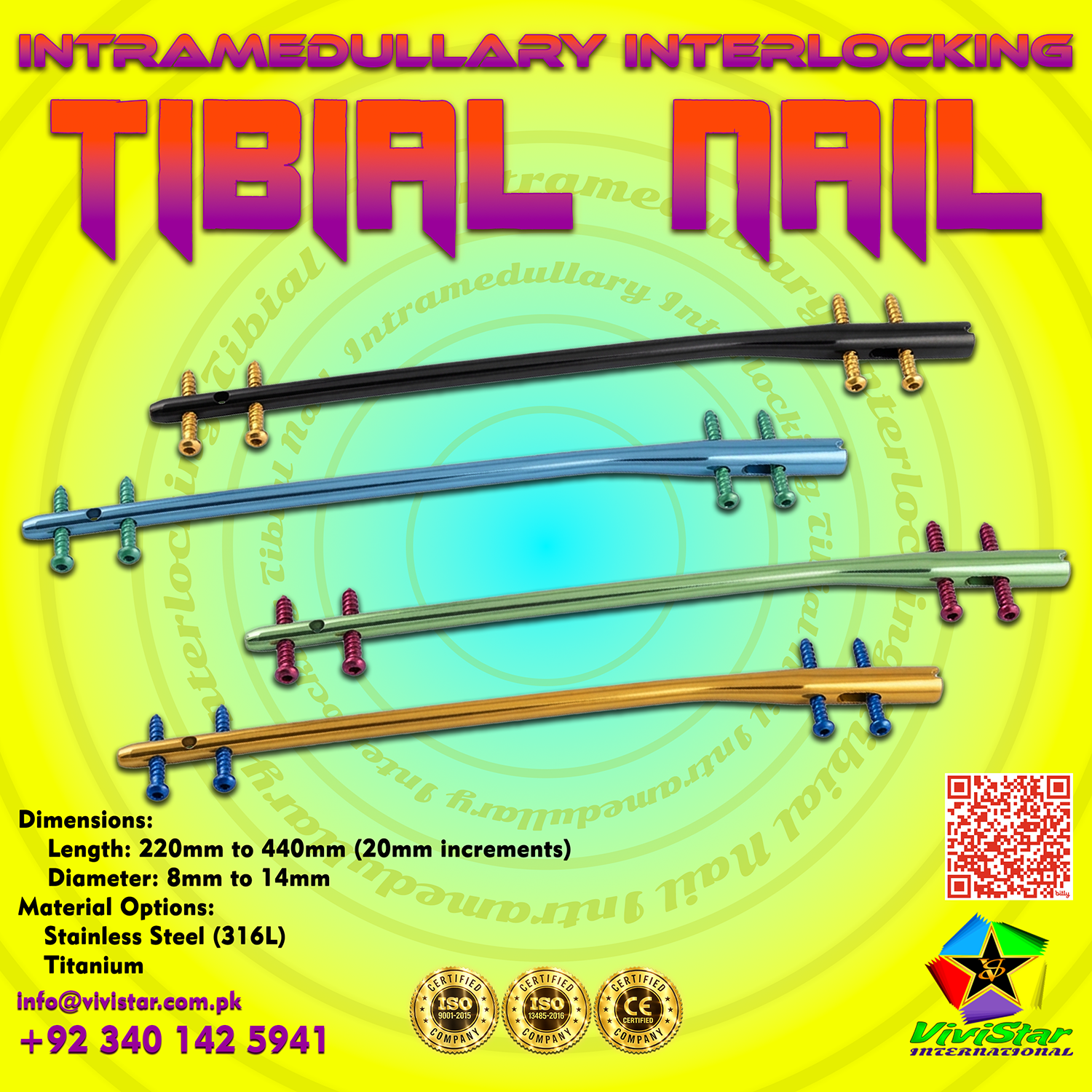
The Intramedullary (IM) Interlocking Tibial Nail is a high-performance orthopedic implant engineered for the stable internal fixation of diaphyseal, proximal, and distal tibial fractures. Acting as a load-sharing internal splint, this system provides precise rotational, axial, and bending stability across the bone segments. By safeguarding the periosteal blood supply and minimizing soft tissue disruption, it promotes indirect bone healing via robust callus formation, facilitating early postoperative mobilization and accelerated patient recovery.
Key Structural & Mechanical Features
- Anatomical Herzog Bend: Features a precision-engineered proximal anterior bow (typically a 10° Herzog bend) that matches the natural geometry of the tibial medullary canal, facilitating streamlined insertion and reducing the risk of malalignment.
- Cannulated & Solid Core Engineering: Available in both cannulated shafts for smooth, reamed insertion over a guide wire, and solid core configurations optimized for unreamed techniques to preserve maximum endosteal circulation.
- Proximal Dynamization Slot: Designed with a dedicated proximal oval hole that allows up to 7mm of controlled axial compression (dynamization). This shifts the mechanical load directly to the fracture site during late-stage healing to stimulate bone remodeling while maintaining rigid rotational control.
Technical Specifications
- Material Modalities: Forged from high-grade Stainless Steel (316L) for superior mechanical strength, or medical-grade Titanium Alloy (TAN / Ti-6Al-4V) for optimized fatigue resistance, enhanced biocompatibility, and artifact-free MRI compatibility.
- Nail Lengths: Range from 220 mm to 440 mm, structured in precise 20 mm progressive increments.
- Nail Diameters: Available from ∅ 8.0 mm to 14.0 mm to accommodate varied medullary canal profiles.
- Proximal Trajectories: Outfitted with multiple multidirectional locking options, typically incorporating three unique oblique slots and two medio-lateral (ML) screw configurations.
- Distal Configuration: Multi-planar locking layout consisting of specialized anteroposterior (AP), lateral, and oblique locking holes positioned exceptionally close to the distal tip to secure short metaphyseal fragments.
System Variants & Specialized Design Alterations
To accommodate complex fracture topologies and distinct surgical approaches, this system is offered in multiple industry-standard design variations:
- Expert Multi-Directional Nailing Style: An advanced low-profile configuration incorporating high-density, multi-planar locking clusters at both the proximal and distal extremities. This expanded hole matrix provides rigid angular stability, extending the indications of IM nailing safely into the proximal and distal thirds of the tibia where bone-to-nail contact is minimal.
- Anatomic Sided System (Left vs. Right Specific): Specialized left- and right-oriented profiles featuring highly accurate, pre-bent trajectories. The proximal screw pathways are strategically directed away from the tibial tubercle to eliminate patellar tendon impingement, while the distal holes are angled to target specific fragments (such as the posterior malleolus) without encroaching on the fibular incisura or injuring local tendons.
- Anti-Infection Bio-Active Coating (PROtect Style): Implants layered with an advanced polymer-controlled antibiotic or silver-ion matrix. This bio-active shield slowly releases localized antimicrobial agents to impede bacterial colonization on the hardware surface, making it highly effective for open fractures, revision procedures, or immunocompromised polytrauma cases.
- Angular Stable Locking System (ASLS Compatibility): Modified screw-hole inner geometries that accept specialized bio-resorbable sleeves or secondary locking mechanisms. This eliminates the microscopic “play” between the locking bolt and the nail hole, creating a rigid mono-bloc construct that reduces fracture-site toggling in osteopenic bone.
- Suprapatellar Entry Instrumentation Layout: Instrumentation sets modified to accommodate a semi-extended knee position through a suprapatellar approach. This technique neutralizes the intense pulling forces of the quadriceps tendon during insertion, simplifying fluoroscopic C-arm alignment and preventing the apex-anterior deformity typical of classic infrapatellar nailing.
Essential Component Architecture
- Standard Locking Screws: Heavy-duty, fully threaded ∅ 4.0 mm screws (optimized for ∅ 8.0 mm and 9.0 mm nails) and ∅ 5.0 mm locking screws featuring a dual-core design for maximized cortical purchase and enhanced mechanical shear resistance.
- Cancellous Bone Locking Screws: Highly specialized, deep-threaded proximal screws designed to optimize bone purchase and grip within the porous cancellous architecture of the tibial metaphysis.
- Threaded End Caps: Available in 0 mm flush profiles up to 15 mm extended heights. These caps block the entry of bone or soft tissue ingrowth into the proximal nail thread, ensuring effortless socket engagement during subsequent hardware removal, while allowing the surgeon to adjust nail height if over-inserted.
Contact & Ordering Information
For Pricing, Bulk Orders or Custom Configurations, Please get in touch with our Technical Sales Team
📱 WhatsApp: +92 340 142 5941
📧 E-Mail: info@vivistar.com.pk